Category: Guides
Technical hardware architecture, quantization strategies, and local AI agent pipelines.
-
Production Python Agent Setups on 8GB Hardware: SQLite State, Watchdogs & Zero Cloud Bloat
How to architect 24/7 autonomous Python agent workflows on modest local hardware using atomic SQLite state ledgers, PM2 process supervision, and strict token budgets.
-

Voice Cadence & Room Tone in 2026: Designing Believable Soundscapes for AI Motion Studies
A practical production guide to pairing unhurried spoken cadence, physical room tone, and ambient beds with 9:16 AI motion studies so sound matches light.
-

Autonomous Studio Publishing in 2026: Turning Local GPU Renders Into Search-Indexed Web Galleries
Inside our lean, zero-bloat publishing architecture: converting raw local renders into SEO-complete WordPress galleries, WebP assets, and instant IndexNow pings.
-
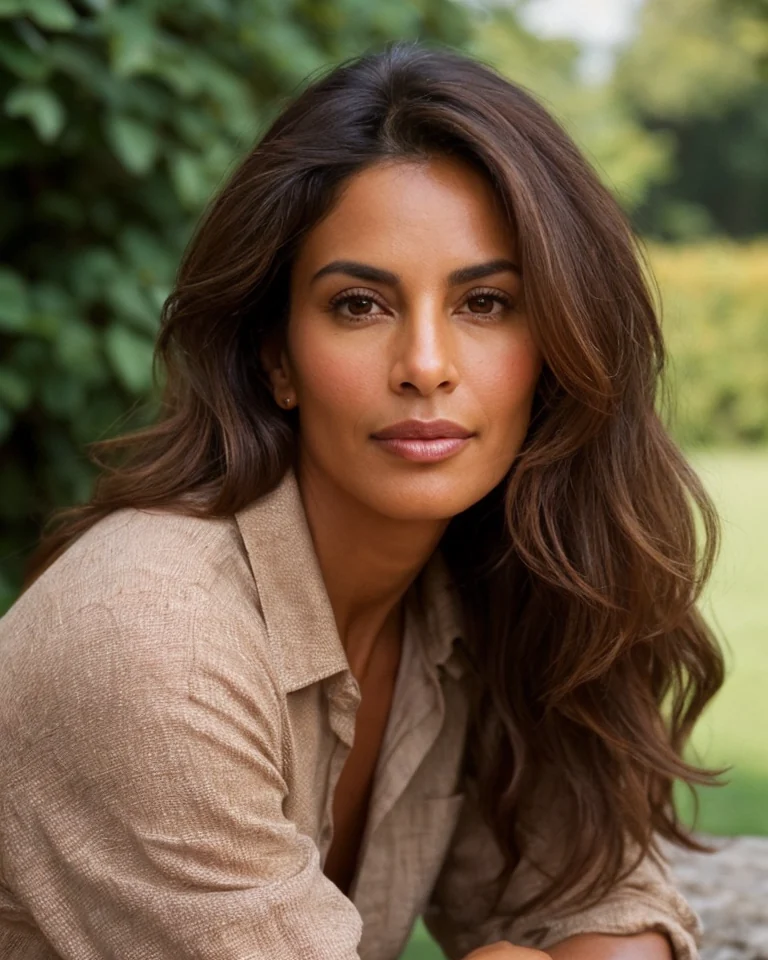
Camera Angles That Command Emotion: Overhead, Low-Angle & Split-Diopter Framing in 35mm AI Portraiture
Break free from repetitive eye-level passport portraits using 90-degree overhead geometry, low-angle Haussmann framing, motion panning, and split-diopter optics.
-

Vertical Cinema in 10 Seconds: Why Spoken Micro-Monologues Outperform Loud Reels in 2026
How unhurried 9:16 framing, natural room tone, and single-thought spoken monologues achieve higher audience retention than frantic short-form edits.
-
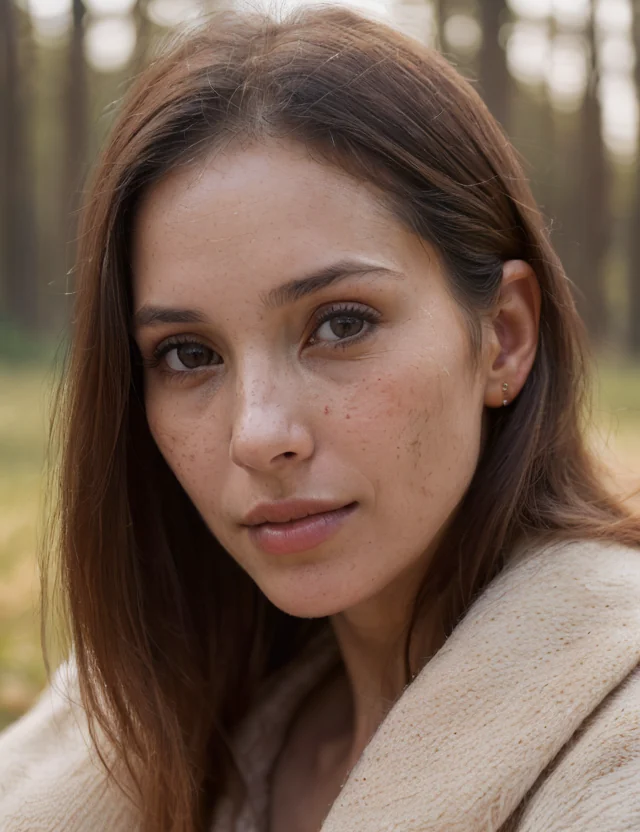
Color Mood & Atmosphere: Crafting Calm Nordic Minimalism in Digital Imagery
How restrained earth palettes, tactile raw materials, and quiet negative space establish enduring atmospheric calm in contemporary visual imagery.
-

The Art of Framing: Wide vs. Close-Up Perspectives in Visual Storytelling
Explore the narrative dialogue between wide environmental framing and intimate portraiture, balancing spatial context against emotional eye contact.
-

Light Before Keywords: Why Classic Portrait Lighting Beats Overcomplicated Prompts
Why fundamental lighting physics—soft window illumination, Rembrandt shadows, and golden rim glow—create striking visual clarity without bloated prompt lists.
-

When Machines Step Into the Physical World: How Humanoid Robotics Could Reshape Everyday Work Before 2030
As autonomous bipedal systems move from digital simulations to concrete workshops, human labor faces its most physical reckoning before 2030.
-
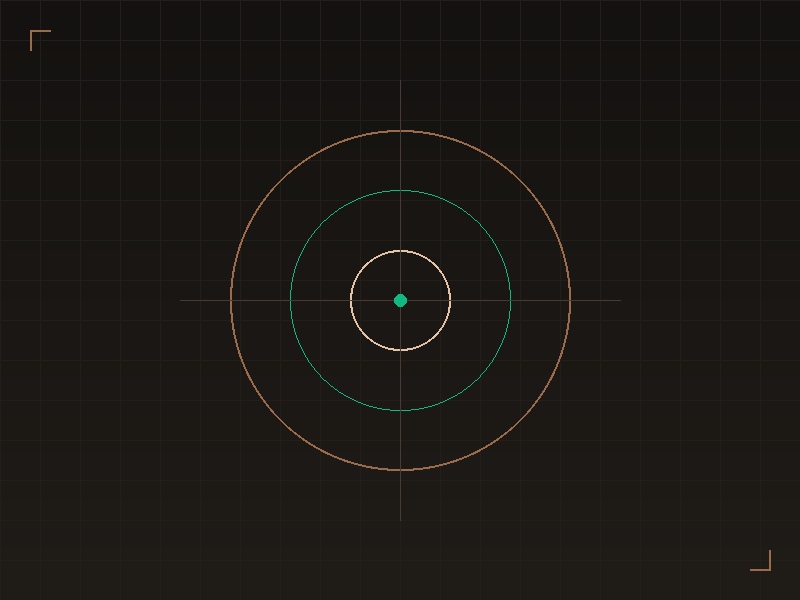
The Imperfection Protocol: 3 Prompts That Strip Synthetic Gloss Off AI Art
Eliminate plastic skin, waxy eyes, and symmetrical uncanny valley. 3 battle-tested prompt architectures featuring dermal micro-freckles, natural asymmetry, and tactile oatmeal linen with 1-click copy.
-
The Latency Paradox: How We Run Microsecond Prediction Market Feeds on Local Hardware
Why cloud-hosted prediction market bots lose to local bare metal. An architectural deep-dive into Polymarket vs Kalshi WebSocket feeds, Order Flow Imbalance (OFI), and our proprietary AlphaMatrix engine.
-
The Uncensored Local Creative Stack: Running Open-Weights Models for Noir Storytelling & Scripts
Commercial cloud LLMs enforce moralizing guardrails that sterilize gritty noir, psychological thrillers, and raw dialogue. Here is how to run uncensored open-weights models (Dolphin, Mistral-Nemo, Command-R) locally on an 8GB GPU with optimal temperature and top-p tuning for narrative fiction.
-
Zero-Cloud Agent Network: Building an Autonomous Multi-Agent Swarm with Ollama, SQLite & Python
How to replace $200+/month cloud agent subscriptions with an autonomous local multi-agent network running on a repurposed ThinkPad T440 and RTX 3070 Ti. Complete working Python task queue, SQLite schema, deterministic JSON schema dispatching, and PM2 process management.
-
Flux.1 on 8GB VRAM: The Complete GGUF & NF4 Low-Memory ComfyUI Blueprint
How to run Black Forest Labs Flux.1 Schnell and Dev on an 8GB GPU without CUDA out-of-memory errors. Quantized GGUF node setup, NF4 v2 checkpoints, split-clip t5xxl offloading, ComfyUI low-memory startup flags, and complete workflow JSON architecture.
-
DeepSeek-R1 vs. Qwen 2.5 on 8GB VRAM: The Speed, Token/Sec & Quantization Benchmark
A rigorous hardware benchmark comparing DeepSeek-R1-14B and Qwen-2.5-14B on an NVIDIA RTX 3070 Ti (8GB VRAM). VRAM allocation math, Q3_K_M vs Q4_K_M speeds, CPU offload latency, and exact Ollama/llama.cpp startup flags.
-
The In-House Failover & Sync Matrix: Encrypted Node-to-Node Backups Across Consumer Hardware
Technical in-house hardware guide: Node-to-Node Replication, rsync, zstd, Disaster Recovery. Part of the Luca Automated 8GB VRAM architecture protocol.
-
The 24/7 Mobile AI Bridge: Secure Telegram/Signal Assistant Powered by ThinkPad T440
Technical in-house hardware guide: 24/7 Mobile AI Bridge, ThinkPad T440, Tailscale, Telegram Bot. Part of the Luca Automated 8GB VRAM architecture protocol.
-
Local Multi-Agent Swarms: Orchestrating Autonomous Agents via Ollama & SQLite
Technical in-house hardware guide: Local Multi-Agent Swarms, Ollama, SQLite Task Queue. Part of the Luca Automated 8GB VRAM architecture protocol.
-
Running 14B Reasoning Models on an 8GB Card: DeepSeek-R1 & Qwen 2.5 Tactics
Technical in-house hardware guide: 14B Reasoning Models, DeepSeek-R1, Qwen 2.5, Layer Offloading. Part of the Luca Automated 8GB VRAM architecture protocol.
-
The $50 24/7 AI Server: Setting Up PM2, SSH and Persistent Agent Queues on a Used ThinkPad
Technical in-house hardware guide: ThinkPad T440, PM2, Low-Power 24/7 Agent Server. Part of the Luca Automated 8GB VRAM architecture protocol.
-
Building an Autonomous Local Media Engine: Generating Flux & SDXL Art on Consumer Hardware
Technical in-house hardware guide: ComfyUI, Flux.1, SDXL, Tiled VAE, Memory Flags. Part of the Luca Automated 8GB VRAM architecture protocol.
-
The Zero-Cost Local RAG Pipeline: Running Private Document Search on an 8GB GPU
Technical in-house hardware guide: Local Embeddings, Ollama, ChromaDB, 8GB GPU. Part of the Luca Automated 8GB VRAM architecture protocol.
-
The 8GB VRAM Matrix: Running Advanced AI Workflows on an RTX 3070 Ti Without OOM Errors
Comprehensive engineering guide to running advanced AI workflows, GGUF/EXL2 quantization, ComfyUI memory flags, and local Python orchestration on an 8GB RTX 3070 Ti without CUDA OOM errors.